

Trust is tested less by stated values than by the decisions employees experience. A workplace integrity framework connects practical ways of working, core building blocks and ongoing review to help organisations align everyday conduct with their values. It includes nine building blocks, from ethical leadership and clear procedures to channels for raising concerns and mechanisms for accountability.
Fairness shows up in ordinary moments: how a concern is heard, how expectations are applied and whether leaders take responsibility for their decisions. When these practices are consistent, employees have clearer grounds to speak up and greater confidence in how workplace issues are handled.
This article explains what integrity at work means and how a framework can guide everyday decisions and behaviour. It also explores how fair processes relate to employee wellbeing and financial performance, including where consistent standards help and what it takes to sustain them.
Key Takeaways
- Build trust by applying clear standards consistently and taking responsibility for decisions.
- Look beyond written values: leadership behaviour and everyday choices show what integrity means in practice.
- Make ethical conduct easier by connecting policies, guidance and opportunities to raise concerns.
- Review workplace patterns to understand how fair processes can support employee wellbeing and sound financial performance.
Building trust through consistency and accountability
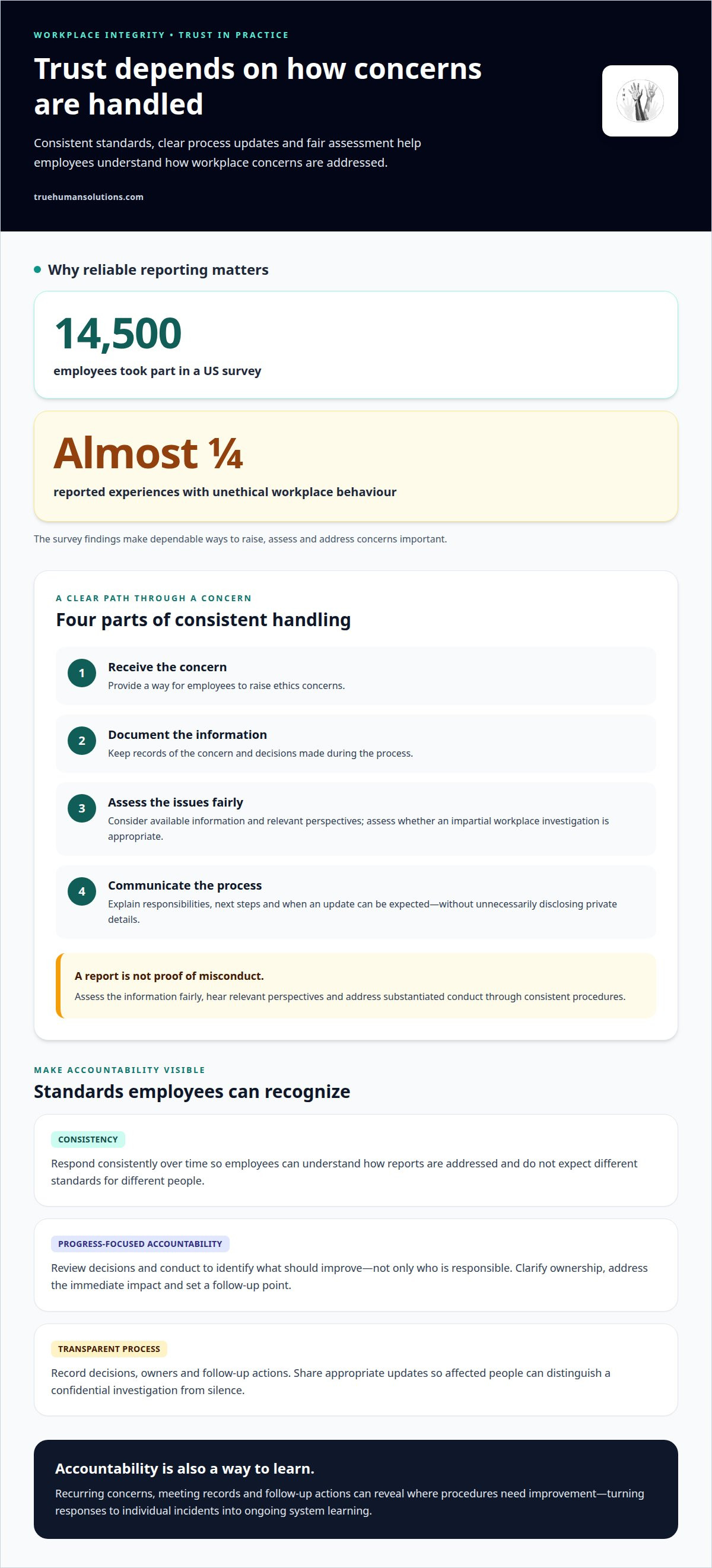
Organisations should receive ethics concerns, document the information, assess whether an impartial investigation is appropriate, and communicate the process clearly. Consistent handling helps employees understand how reports are addressed while protecting the dignity of everyone involved.
Consistency and Progress-Focused Accountability
Progress-focused accountability reviews decisions and conduct to identify what should improve, not just who is responsible. For example, after an approval is missed, a manager can clarify ownership, address the immediate impact and set a follow-up point. This preserves individual responsibility while giving the team a practical way to learn. Consistent responses over time help build a culture where people can raise concerns without expecting different standards for different individuals.
Transparency in Accountability
Transparency means explaining the process, responsibilities and next steps without unnecessarily disclosing private details. In meetings, leaders can record decisions, owners and follow-up actions, then share appropriate updates with affected stakeholders. This makes accountability visible in practice and helps employees distinguish a confidential investigation from silence. They may not receive every detail, but they should understand how their concern is being handled and when to expect an update.
Responding to Mistakes and Ethics Concerns
Accountability for mistakes combines honest acknowledgment with a proportionate response and a plan to prevent recurrence. For an ethics report, assign responsibility for documenting the concern, assess the issues raised and decide whether a workplace investigation is appropriate. Keep records of decisions and communicate process updates respectfully. A report is not proof of misconduct: assess available information fairly, hear relevant perspectives and address substantiated conduct through consistent procedures. This helps preserve trust in both the process and its outcome.
The scale of the issue makes reliable reporting important: a US survey of 14,500 employees found that almost one quarter reported experiences with unethical workplace behaviour. Leaders can use recurring concerns, meeting records, and follow-up actions to identify where procedures need improvement. Reviewing those patterns turns accountability into ongoing system learning, rather than a response limited to one incident.
What is integrity in the workplace?
Integrity at work connects an organisation’s values with leadership conduct, decision-making and everyday practice. It gives employees a clearer basis for understanding expected behaviour and raising concerns.
Leadership Behavior and Integrity
Leadership behavior is the visible example that shows how an organisation’s values apply in daily work. It matters because employees notice whether leaders follow the same standards they expect from others. A manager who acknowledges an error, explains the correction and applies procedures consistently makes commitment observable. Organisational change also starts with leaders: they can explain why a practice is changing, model the new approach and reinforce it through their own decisions. A workplace integrity framework gains credibility when leaders make these values visible.
Training and communication help make expectations actionable. Leaders can pair formal ethics training with scenario-based guidance for decisions employees face, then invite questions in team discussions. For example, a scenario might ask how to disclose a conflict before taking part in a decision. Revisiting the process in relevant settings turns values into usable guidance, rather than words employees encounter only in a policy document.
Integrity Frameworks and Compliance Programs
A workplace integrity framework can combine procedures that discourage unethical conduct with practices that encourage ethical behaviour. Both matter, but a policy alone cannot show how values should guide a difficult judgment. A framework connects leadership, procedures, communication and accountability to daily choices, helping organisations address the gap between written expectations and actual practice.
To develop a framework, leaders can clarify organisational values, identify decisions that create ethical uncertainty and align procedures with those risks. They can assign responsibilities, explain reporting routes and review whether employees understand the expectations. This helps make a workplace integrity framework part of everyday operations, rather than a collection of disconnected documents.
Laws and Regulations Governing Workplace Integrity
In the United States, workplace conduct is shaped by applicable federal, state and local requirements. The relevant rules depend on the issue, which may involve discrimination, safety, privacy or reporting concerns. An integrity framework does not replace legal obligations; it helps an organisation set internal expectations and processes alongside them. Leaders should identify the requirements that apply to their operations and reflect them in policies, training and response procedures.
For implementation, assign responsibility for keeping procedures aligned with applicable requirements, and document how concerns are received and addressed. Explain expected conduct, available reporting channels and how the organisation handles concerns. Review these processes when operations or workplace practices change, so employees and managers have guidance suited to the decisions they face. A workplace integrity framework provides structure for this ongoing review.
Embedding integrity into everyday decisions and behaviours
A workplace integrity framework turns ethical expectations into decision rules, everyday conduct and ongoing review. Its core components are ways of working, building blocks and continuous improvement, connected so policies can guide real choices.
Parameters for Workplace Decisions
Clear parameters define the values, relevant factors and approval limits employees should use when making decisions. They let staff exercise judgment without guessing where their authority ends. For example, a purchasing process can require decision-makers to disclose a conflict before reviewing proposals. A manager can then document the rationale, seek another review when needed and explain how the decision followed the stated criteria.
Integrity in Business Decision-Making
Integrity in business decisions means weighing organisational goals alongside ethical obligations and effects on people. A decision driven only by speed or cost can overlook conflicts, unfair treatment or harm to stakeholders. Before approving a change, leaders can identify affected groups, consider competing interests, record their reasons and invite relevant input. This makes ethical considerations part of the decision itself.
Fair and Consistent Decisions
Fair decisions apply relevant criteria consistently while taking evidence and context into account. This matters when managers assess conduct, allocate work or respond to requests. For example, two similar requests should be reviewed against the same policy, with any different outcome explained by a relevant distinction. Recording the criteria and reasons helps reveal uneven treatment, supports later review and gives employees a clearer understanding of how decisions are reached.
Core Framework Components
The framework connects six ways of working with nine building blocks and continuous improvement. The six ways are ongoing commitment, alignment, relationships, transparency, ease and inclusion. The building blocks include values, ethical leadership, a code of conduct, procedures, people processes, speak-up arrangements, assigned roles, progress reporting and assurance. Together, these elements give an organisation a structure for embedding integrity. Regular review can identify gaps between policy and practice and guide improvement.
Connecting integrity to employee wellbeing and financial performance
A culture of integrity can support wellbeing when employees see fair actions, usable reporting channels and respectful follow-up. These practices can make it easier to raise concerns early, while feedback helps leaders identify where working conditions or decisions need attention.
Financial performance is connected too, though integrity alone does not guarantee better results. Those figures show why prevention, sound controls and timely responses matter to organisational resilience.
Implementation cost depends on the organisation’s existing policies, identified risks, training needs and required process changes; pricing is determined after a quote request. Employers can measure effectiveness by reviewing turnover, hotline trends, audit findings, policy exceptions and recurring manager issues. Pair those indicators with employee feedback and documented improvement goals, then assess progress regularly.
A weak approach can leave misconduct unreported, lead to inconsistent decisions and make recurring problems harder to address. It can also expose an organisation to fraud losses: the ACFE findings illustrate the potential financial stakes. For employees, unclear standards or poor responses can undermine confidence in raising concerns. Leaders should examine both outcomes and process quality, including whether reports receive appropriate attention and whether lessons lead to changes.
Gallup reported that only 20% of employees worldwide were engaged in 2025. That figure isn’t proof that integrity practices alone determine engagement, but it reinforces the value of attending to employees’ experience. Leaders can connect culture measures with actions: review concern patterns, invite feedback, assign improvement owners and revisit whether changes helped. To strengthen investigation processes, explore workplace investigations support.
Research outlined in the Journal of Academic and Business Ethics reports that high-integrity organisations foster better performance in teamwork and employee advocacy. These outcomes can complement, rather than replace, measures of employee experience.
Lyra describes a report about mental health at work involving 7,500 employees, offering another lens on workplace wellbeing. Leaders can consider this evidence alongside internal feedback.
TrueHuman Solutions: The TrueHuman ER Case Framework
The TrueHuman ER Case Framework helps structure employee relations matters through a clear, documented process. It can be useful when a workplace concern calls for careful scoping, consistent handling and attention to the people affected. For concerns requiring formal fact-finding, TrueHuman Solutions also provides workplace investigations.
The framework focuses on understanding the situation, agreeing on scope, documenting the process and keeping affected people in view. This structure helps leaders and practitioners approach sensitive cases methodically and distinguish the immediate issue from broader workplace patterns. The Workplace Integrity Framework and ER/HR Practitioner Mini-Course are also available to strengthen integrity practices and practitioner knowledge.
If you’re addressing a complex employee relations matter or reviewing how concerns are handled, contact TrueHuman Solutions to discuss the right next step.
Make the next decision a starting point
Choose one recurring decision where employees need clearer guidance. Define what information should inform it, who owns the decision and how people can raise concerns about its effects. This gives your workplace integrity framework a practical starting point, grounded in a real choice rather than an abstract statement of intent.
Make space for people affected by that decision to describe what works and what creates uncertainty. Their perspectives can help leaders refine the process and keep expectations clear. Progress comes through deliberate attention: identify a meaningful change, make responsibility visible and consider what the organisation learns as the change takes hold.
If you’re ready to strengthen how your organisation handles workplace matters, contact TrueHuman Solutions to discuss a considered next step. Steady, thoughtful decisions can help make integrity part of how work gets done.
Frequently Asked Questions
What policies should a workplace integrity framework include?
Include policies that explain expected conduct, reporting options, conflict disclosures, investigation processes and responsibility for follow-up. Make each policy usable in real situations. For example, clarify how an employee should disclose a personal connection to a vendor before taking part in a purchasing decision. Cross-reference related procedures, identify who handles questions and review documents when workplace practices change. This helps employees find consistent guidance instead of relying on informal interpretation.


