

An investigation should conclude with a clear account of what was reviewed, what the evidence supports, and what follow-up may be appropriate. A workplace investigation consultant can help establish an impartial process, document findings, and connect them to practical next steps. The work can continue beyond interviews, with remediation, policy support, training, and case management helping leaders respond consistently.
A fair process takes concerns seriously without assuming what happened. That balance depends on a clear scope, careful evidence review, and respectful interviews. Findings should distinguish established facts from unresolved questions.
This article explains what an investigation consultant does, how the process is shaped, and what affects its scope. It also covers how to close an investigation, document findings, plan corrective action, strengthen policies, and build practitioner skills. The goal is to identify an evidence-based next step that considers the people affected.
Key Takeaways
- Set a clear scope and review relevant evidence before interviews so the process can consider competing accounts fairly.
- Respond to reports of discrimination, harassment, or retaliation with a structured review that distinguishes evidence from assumptions.
- Use documented findings to guide proportionate follow-up and identify where policies or training may need attention.
- Plan case management and investigator training alongside the investigation, so the closeout leads to practical, consistent next steps.
Impartial interviews
A workplace investigation consultant should assess each account against the same defined questions and available evidence. Before interviews, set the scope, identify relevant witnesses, and explain the process consistently. For example, ask the complainant and respondent about the same incident timeline, then give each a fair chance to address material points. This helps ensure concerns are considered without treating allegations as established facts.
To find a workplace investigation consultant near you, search for workplace investigation services in your area and assess whether the investigator can work impartially. Consider whether internal relationships, reporting lines, or prior decisions could affect perceived independence. An external investigator may offer a more independent review when those internal dynamics are part of the concern; an internal investigator may be suitable when conflicts can be managed and the person has the necessary skill.
Ask how interviews will be documented. Reports can distinguish the evidence reviewed, findings, and recommended follow-up. Transcripts and interview notes are different records, so clarify which will be created, how corrections are handled, and who may access them. Consistent documentation helps organizations explain how they assessed conflicting accounts and reached conclusions.
Set a clear path for internal communications: decide who receives progress updates, who speaks for the organization, and how confidentiality will be protected. During a crisis, leaders can acknowledge that a concern is under review without sharing witness statements or prejudging the outcome. This supports measured communication while the investigation proceeds.
Workplace culture can affect what witnesses feel safe disclosing. A close-knit team, a senior employee’s influence, or fear of retaliation may shape how people describe events. The investigator should consider these conditions when choosing interview order, framing questions, and assessing inconsistencies. Impartiality means considering context, not making assumptions about what workplace norms imply.
Discrimination, harassment, and retaliation complaints
A thorough review examines the reported conduct, relevant policies, and comparable decisions. In the United States, investigation fees depend on the scope, evidence review, interviews, and reporting. The fee is determined after the work is scoped.
Discrimination and Harassment Investigations
According to United States Congress, Title VII of the Civil Rights Act of 1964 identifies sexual harassment as discrimination in the United States. Ask how the investigator will test allegations against records and witness accounts. A thorough review distinguishes credibility assessments from assumptions about demeanor, status, or delayed reporting. Internal investigations should also compare relevant workplace decisions and policies when assessing a discrimination complaint.
Sexual Misconduct Complaints
Sexual misconduct complaints call for questions about specific conduct, context, timing, and impact. Investigators should interview the reporting employee, the person accused, and relevant witnesses separately, then compare accounts with messages or other records. The review should consider whether the conduct was repeated or affected workplace conditions. Assess whether the investigator can handle sensitive allegations without leading questions or premature conclusions.
Retaliation Investigations
A retaliation review examines what changed after an employee raised a concern. Compare schedules, assignments, performance feedback, access, and discipline before and after the report. For example, a sudden change in shifts warrants review alongside the manager’s stated reason and comparable decisions. Assess evidence about both the original harassment allegation and later adverse treatment, keeping the findings distinct.
Confidentiality and Retaliation Prevention
Manage confidentiality through defined access, careful record handling, and limited updates. Before interviews, explain that information will be shared only as needed to conduct the review, rather than promising absolute secrecy. To help prevent retaliation, designate a reporting contact and document subsequent employment decisions involving participants. Follow up promptly on new concerns and assess whether workplace changes could expose or isolate a reporting employee.
Post-investigation remediation and policy support
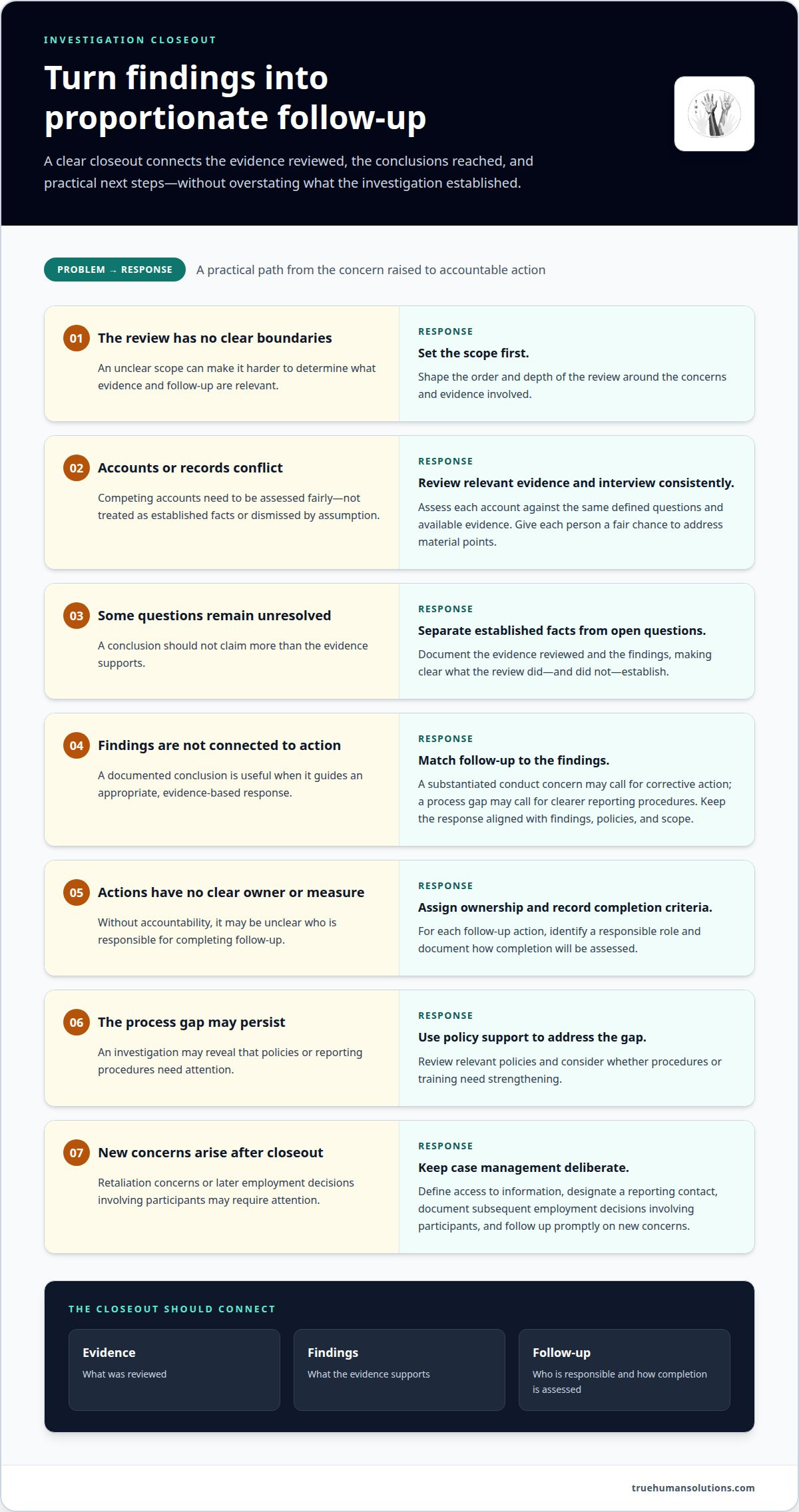
Findings are useful when they guide appropriate action. A documented closeout should connect evidence, conclusions, and follow-up without overstating what the review established.
In the United States, applicable requirements depend on the complaint and relevant employment law. According to United States Congress, Title VII of the Civil Rights Act of 1964 treats sexual harassment as discrimination. Internal policies also guide how organizations receive concerns and conduct investigations.
A workplace investigation typically follows defined steps: set the scope, review evidence, interview relevant people, assess findings, document conclusions, and plan follow-up. The order and depth of each step should reflect the concerns and evidence involved.
There is no single standard duration for every investigation. Timing depends on the number of issues and witnesses, the availability of records, and whether new evidence requires further review.
After documenting findings, assign each follow-up action to a responsible role and record how completion will be assessed. For example, a substantiated conduct concern may call for corrective action, while a process gap may require clearer reporting procedures. Keep the response aligned with the findings, policies, and agreed scope. An independent review can help assess whether proposed steps address the identified behavior without going beyond the evidence.
A policy review can examine how employees report concerns, who receives them, and how they are escalated. Compare written procedures with actual practice. For example, a policy naming a reporting channel should explain how concerns reach the appropriate decision-maker. Training can address specific gaps, such as managers failing to document complaints or employees being unsure where to report misconduct.
For recurring situations, assess whether policies and training are understood and applied consistently. Employment law issues may require separate legal advice; investigation findings alone are not a substitute. A clear record of the review, decisions, and assigned follow-up helps organizations track actions and refine procedures responsibly.
Investigator training and case management
Training helps investigators use a consistent method when accounts conflict or evidence is sensitive. Assess whether they can plan interviews, evaluate records, distinguish direct knowledge from hearsay, and document findings clearly. An in-house investigation may create greater liability if HR lacks the training to conduct it correctly. Look for practical preparation that covers these tasks, not just familiarity with workplace policies.
Case management starts with a defined file and a clear sequence of work. The case lead can track the complaint, scope, evidence received, interviews completed, open questions, and decisions requiring follow-up. For example, log a witness identified late in the review and note why an additional interview is needed. A secure, organized record helps prevent missed steps and supports a coherent final report.
Ask how changes to the scope will be handled. New messages or another employee’s account may require further evidence review, revised interview plans, or consultation with counsel. Record why each change was necessary and who approved it. This creates a useful decision trail without treating every new detail as proof. Share sensitive information only with people who need it for their roles.
Choosing an internal or external investigator also affects case management. Internal staff may understand reporting lines and workplace practices, while an external investigator may be more removed from prior decisions. Either way, identify who oversees the work, receives updates, and makes organizational decisions. Counsel can advise on legal questions, while the investigator maintains a clear record of evidence and findings.
Before selecting a workplace investigation consultant, ask how training informs the process from intake through closeout. Explore workplace investigation support for a structured approach to sensitive employee relations matters.
TrueHuman Solutions: The TrueHuman ER Case Framework
TrueHuman Solutions offers The TrueHuman ER Case Framework to help practitioners structure employee relations cases. Use it when a sensitive matter needs a clearer process for understanding the situation, agreeing on scope, documenting decisions, and keeping affected people in view.
For organizations addressing a complaint that needs an impartial review, TrueHuman Solutions also provides Workplace Investigations. The Workplace Integrity Framework and ER/HR Practitioner Mini-Course offer additional support for strengthening workplace practices and practitioner skills. Together, these offerings can help leaders consider both the investigation and the work that follows, without treating findings as a substitute for thoughtful case management.
Contact TrueHuman Solutions to discuss investigation or employee relations support.
Set a Clear Direction for What Comes Next
Choosing a workplace investigation consultant also means deciding how your organization will act on difficult information. Before proceeding, identify what needs attention: an impartial review, stronger case practices, or support for employees and managers handling sensitive concerns. A defined need makes it easier to establish a useful scope and keep the work connected to the people affected.
Fairness comes from deliberate choices, not from reaching a particular finding. Leaders can set expectations for receiving concerns, documenting decisions, and handling follow-up. Clear expectations help employees understand the process and give decision-makers a steadier basis for action.
When your organization is ready to discuss its next step, contact TrueHuman Solutions. A thoughtful conversation can help you clarify the support your situation calls for. Move forward with care, purpose, and a process you can stand behind.
Frequently Asked Questions
How will I know what to do when the investigation is over?
Turn documented findings into assigned actions, owners, and review points. For example, if a manager’s communication needs correction, identify who will address it and how follow-up will be recorded. Keep communications discreet and relevant to each person’s role. Later, assess whether the response addressed the concern and whether new information requires attention. A clear closeout helps ensure an investigation does not end without accountability.
Not sure if an investigation is required?
Consider a structured review when an employee reports unfair treatment, someone observes misconduct, or a supervisor hears about concerning behavior. Leaders do not need to wait for a formal complaint before assessing a report. Start by recording what was reported, who has direct knowledge, and whether immediate steps are needed to protect people or preserve relevant records. This initial assessment helps determine an appropriate response.
What types of allegations should be investigated?
Assess allegations involving discrimination, harassment, retaliation, bullying, policy breaches, or other workplace misconduct. For example, a complaint about unequal access to training may involve a pattern of decisions, while a report of unwanted sexual conduct calls for focused fact-finding. Consider the specific behavior, its context, and any relevant records. A consistent intake process helps leaders distinguish concerns that need investigation from those suited to another response.
What does a workplace investigation consultant do?
A workplace investigation consultant conducts structured fact-finding into an organization’s workplace concerns. The work can include clarifying the assignment, reviewing relevant records, interviewing people with relevant information, and preparing findings. For example, a review might assess whether a reported policy breach occurred, rather than make broader judgments about someone’s character. The consultant’s conclusions should remain tied to evidence gathered within the agreed scope.
When should an employer hire an external investigator?
Use an external investigator when internal relationships, reporting lines, or prior decisions could undermine the perceived independence of a review. This may matter when a complaint concerns a senior leader or the person who would normally oversee internal investigations. External support can also help when internal staff lack investigation experience or capacity. The organization still needs to identify who receives the findings and makes employment decisions.
How do you choose a qualified investigator?
Look for relevant investigation experience, a defined method, and the ability to explain how evidence and conflicting accounts are assessed. Ask how the workplace investigation consultant identifies conflicts, sets assignment boundaries, handles sensitive records, and documents conclusions. A useful discussion should clarify who will conduct the work and how findings will be presented. Choose an investigator whose approach is impartial, clear, and suited to the concerns under review.


